
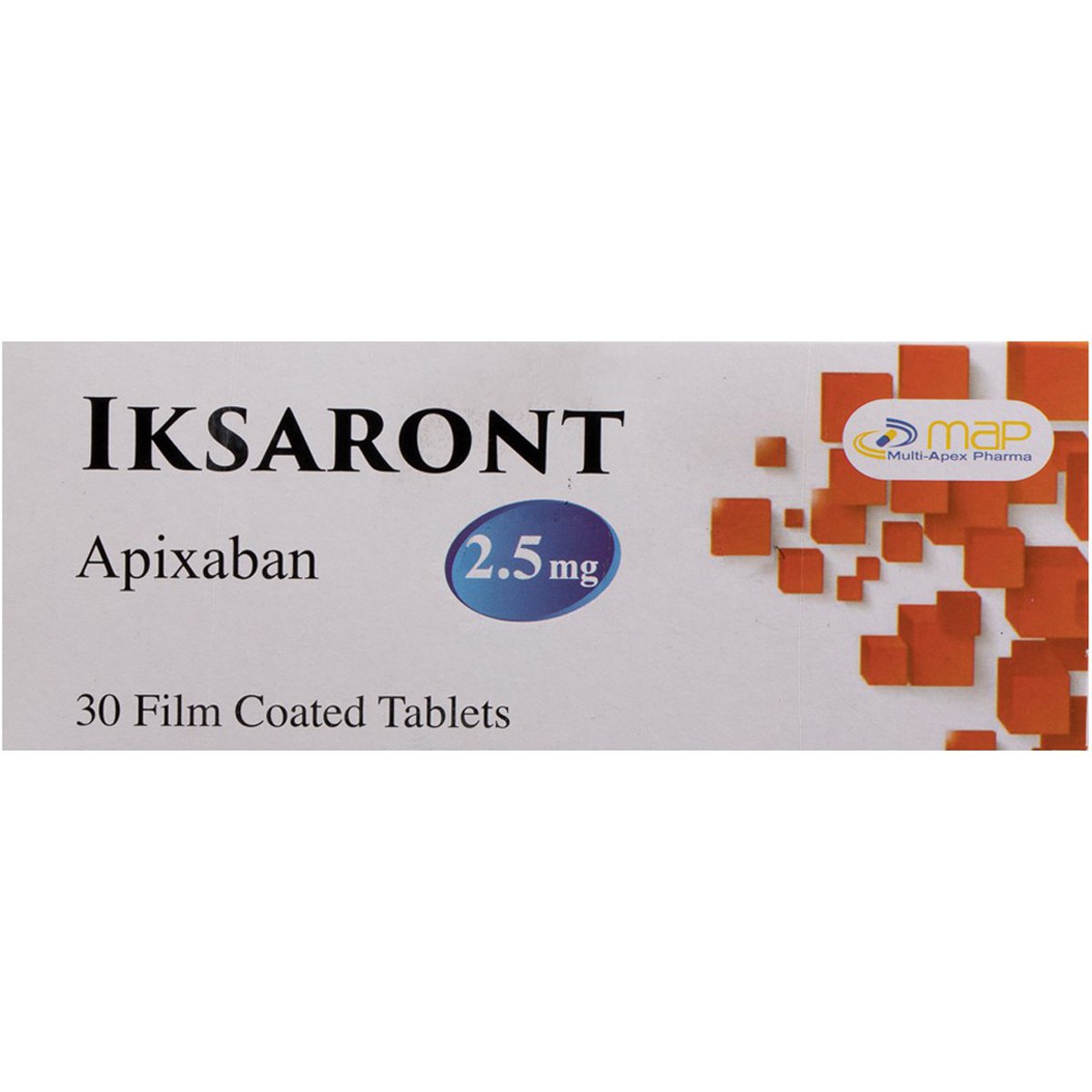
Iksaront
Iksaront 2.5mg 30 Film Coated Tablets
E£ 330,00
Quantity
1
Free delivery over 300 EGP · 24hr express in Cairo
100% authentic — licensed Egyptian pharmacy
14-day return on unopened items
Active Ingredient: Apixaban Deep vein thrombosis: Treatment of deep vein thrombosis; to reduce the risk of recurrent deep vein thrombosis following initial therapy
Note: The American College of Chest Physicians (ACCP) guidelines for VTE suggest apixaban (or dabigatran, rivaroxaban, or edoxaban) over a vitamin K antagonist as long-term anticoagulant therapy in patients with DVT of the leg and without cancer (Kearon 2012; Kearon 2016).
Nonvalvular atrial fibrillation: To reduce the risk of stroke and systemic embolism in patients with nonvalvular atrial fibrillation (AF)
Note: The 2014 American Heart Association/American College of Cardiology/Heart Rhythm Society guidelines for the management of AF recommend oral anticoagulation for patients with nonvalvular AF or atrial flutter with prior stroke, TIA, or a CHA2DS2-VASc score ≥2. As an alternative to warfarin, apixaban may also be used for at least 3 weeks prior and 4 weeks after cardioversion in patients with AF or atrial flutter of ≥48 hours duration or when the duration is unknown
Postoperative venous thromboprophylaxis following hip or knee replacement surgery: Prophylaxis of deep vein thrombosis, which may lead to pulmonary embolism, in patients who have undergone hip or knee replacement surgery
Pulmonary embolism: Treatment of pulmonary embolism; to reduce the risk of recurrent pulmonary embolism following initial therapy
Note: The American College of Chest Physicians (ACCP) guidelines for VTE suggest apixaban (or dabigatran, rivaroxaban, or edoxaban) over a vitamin K antagonist as long-term anticoagulant therapy in patients with PE and without cancer
BUNDLE & SAVE
Frequently bought together
PAIRS WELL WITH
Complete the routine
YOU MAY ALSO LIKE
Related products
CONTINUE BROWSING