
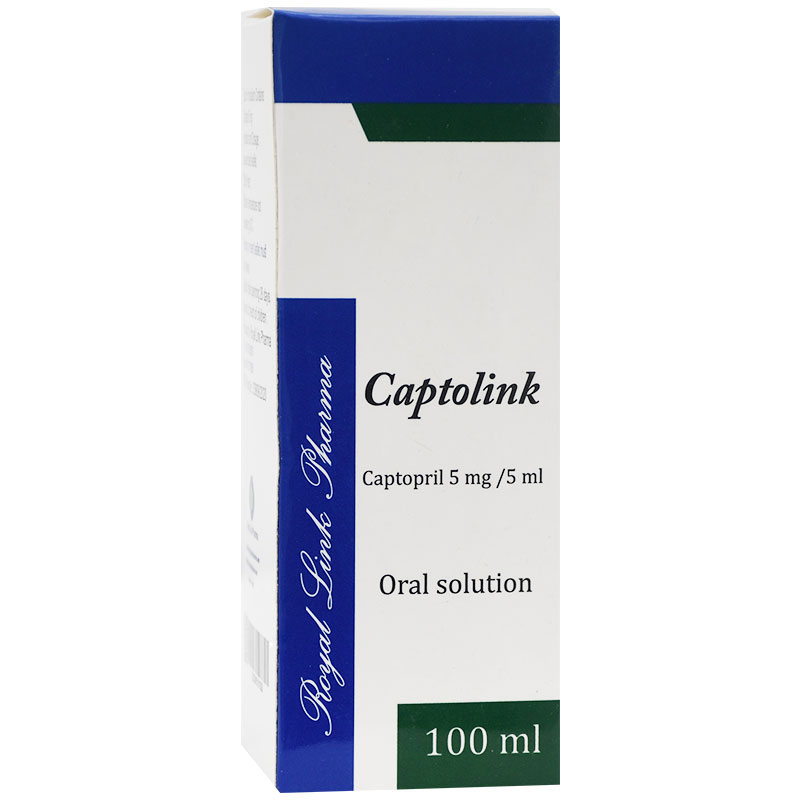
Captolink
Captolink 5mg/5ml Syrup 100ml
E£ 34,00
Quantity
1
Free delivery over 300 EGP · 24hr express in Cairo
100% authentic — licensed Egyptian pharmacy
14-day return on unopened items
Active Ingredient: Captopril Diabetic nephropathy: Treatment of diabetic nephropathy (proteinuria >500 mg/day) in patients with type 1 insulin-dependent diabetes mellitus and retinopathy
Heart failure: Treatment of heart failure
Hypertension: Management of hypertension
Left ventricular dysfunction after myocardial infarction: To improve survival following myocardial infarction in clinically stable patients with left ventricular dysfunction manifested as an ejection fraction of 40% or less, and to reduce the incidence of overt heart failure and subsequent hospitalizations for heart failure in these patients.
Guideline recommendations:
Heart failure: The American College of Cardiology Foundation/American Heart Association (ACCF/AHA) 2013 heart failure guidelines recommend the use of angiotensin-converting enzyme (ACE) inhibitors, along with other guideline directed medical therapies, to prevent heart failure in patients with a reduced ejection fraction who have a history of myocardial infarction (stage B heart failure), to prevent heart failure in any patient with a reduced ejection fraction (stage B heart failure), or to treat those with heart failure and reduced ejection fraction (stage C heart failure) (Yancy 2013).
Hypertension: The 2014 guideline for the management of high blood pressure in adults (Eighth Joint National Committee [JNC 8]) recommends initiation of pharmacologic treatment to lower blood pressure for the following patients:
• Patients ≥60 years with systolic blood pressure (SBP) ≥150 mm Hg or diastolic blood pressure (DBP) ≥90 mm Hg.
• Patients <60 years with SBP ≥140 mm Hg or DBP is ≥90 mm Hg.
• Patients ≥18 years with diabetes and SBP ≥140 mm Hg or DBP ≥90 mm Hg.
• Patients ≥18 years with chronic kidney disease (CKD) and SBP ≥140 mm Hg or DBP ≥90 mm Hg.
Coronary artery disease (CAD) and hypertension: The American Heart Association, American College of Cardiology and American Society of Hypertension (AHA/ACC/ASH) 2015 scientific statement for the treatment of hypertension in patients with CAD recommends the use of an ACE inhibitor (or an ARB) as part of a regimen in patients with hypertension and chronic stable angina if there is prior MI, LV systolic dysfunction, diabetes mellitus, or CKD. A BP target of <140/90 mm Hg is reasonable for the secondary prevention of cardiovascular events. A lower target BP (<130/80 mm Hg) may be appropriate in some individuals with CAD, previous MI, stroke or transient ischemic attack, or CAD risk equivalents (AHA/ACC/ASH [Rosendorff 2015]).
Diabetes and hypertension: The American Diabetes Association (ADA) guidelines recommend an ACE inhibitor (or an ARB) for patients with HTN and diabetes with albuminuria (urinary albumin-to-creatinine ratio [UACR] ≥30 mg/g). For patients with hypertension and diabetes without albuminuria, any of the 4 classes of blood pressure medications (eg, ACE inhibitors, ARBs, thiazide-like diuretics, dihydropyridine calcium channel blockers) may be used and have shown beneficial cardiovascular outcomes (ADA 2017a).
STEMI: The 2013 American College of Cardiology Foundation/American Heart Association guidelines for the management of patients with ST-elevation myocardial infarction (STEMI) states that an ACE inhibitor (eg, captopril) should be initiated within the first 24 hours after STEMI in patients with anterior MI, heart failure, or left ventricular ejection fraction ≤40%. It is also reasonable to initiate an ACE inhibitor in all patients with STEMI
BUNDLE & SAVE
Frequently bought together
PAIRS WELL WITH
Complete the routine
YOU MAY ALSO LIKE
Related products
CONTINUE BROWSING